
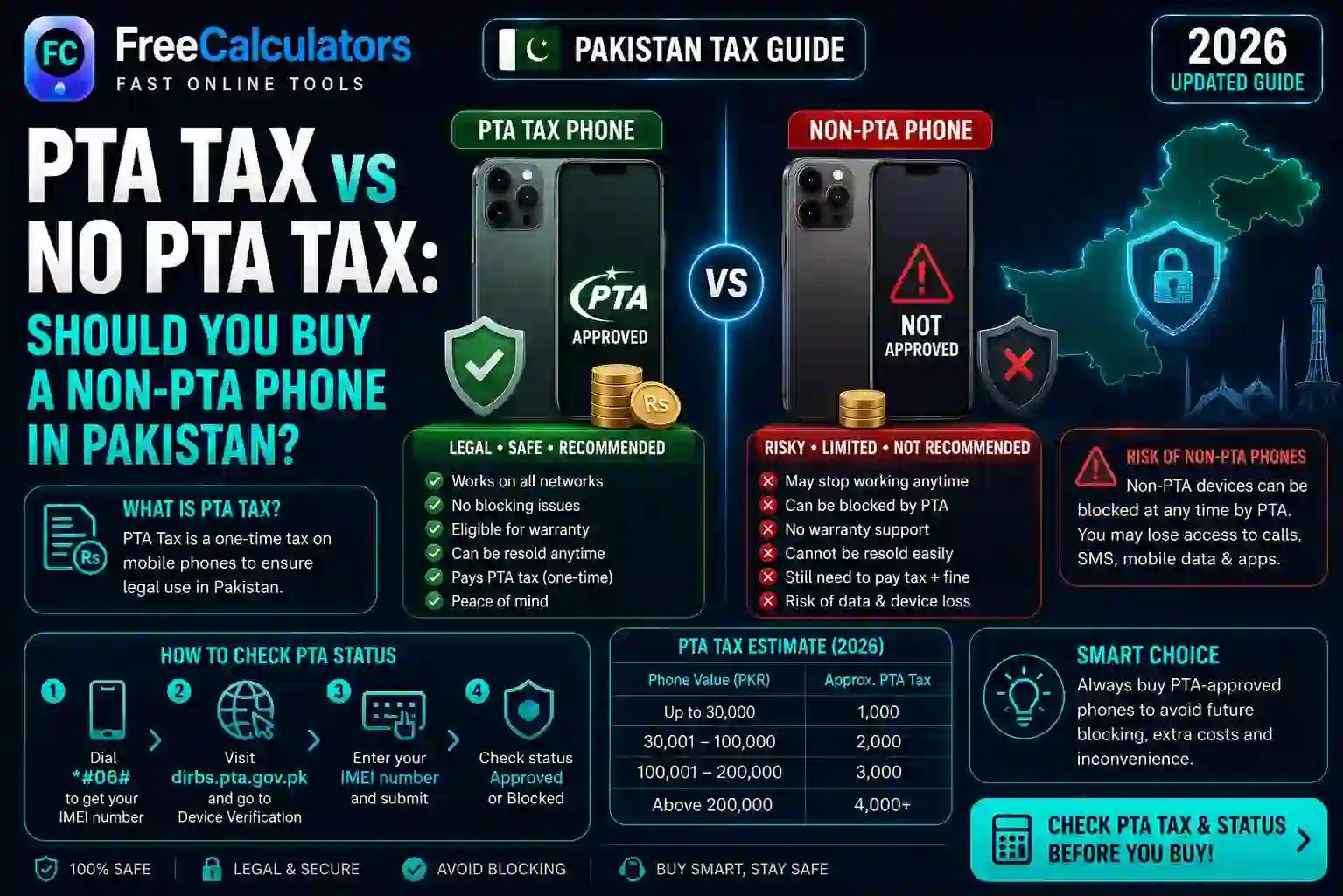
A non-PTA phone can look like a great deal — sometimes 20-30% cheaper than the same model registered and ready to use. But that lower price comes with a countdown clock: roughly 60 days before your phone loses all cellular network access on Pakistani SIMs. This guide breaks down the real cost-versus-risk math so you can decide whether the upfront savings are actually worth it for your situation.
PTA Approved vs Non-PTA: The Core Difference
A PTA-approved phone has had its IMEI registered with the Pakistan Telecommunication Authority's Device Identification Registration and Blocking System (DIRBS), with the applicable tax paid based on the device's assessed customs value. A non-PTA phone is simply one whose IMEI hasn't gone through this process — often because it was brought in informally, gifted, or purchased used from someone who never registered it.
The phone itself is technically identical either way. The difference is purely regulatory: one has cleared the tax and registration process, the other hasn't.
Quick Comparison: PTA vs Non-PTA Phone
| Factor | PTA Approved | Non-PTA |
|---|---|---|
| Upfront price | Higher (tax included) | Lower (20-30%+ cheaper) |
| Cellular network access | Full, permanent | ~60 days, then blocked |
| WiFi, camera, apps | Fully functional | Fully functional, unaffected |
| Legal to own | Yes | Yes (owning isn't illegal) |
| Resale value | Higher, easier to sell | Lower, harder to sell |
Is It Worth Buying a Non-PTA Phone in Pakistan?
For most people planning to use the phone as their primary device long-term, no — the short-term savings get erased once the 60-day network block kicks in, at which point you're either paying the same PTA tax anyway or living with a phone that can't make calls or use mobile data. The math only works out if you have a genuinely temporary use case in mind rather than treating it as a way to permanently avoid the tax.
What Happens If My Phone Is Not PTA Approved?
Once a non-PTA phone is used with a Pakistani SIM, it typically functions normally for around 60 days before being automatically blocked from all major cellular networks — Jazz, Zong, Telenor, and Ufone. After that point, the phone can no longer make calls, send SMS, or use mobile data through any local SIM, though Wi-Fi-based functions continue working without interruption.
Can I Use a Non-PTA Phone With WiFi Only?
Yes, and this is the one legitimate long-term use case where a non-PTA phone genuinely makes sense. Once blocked from cellular networks, the phone still fully supports:
- WiFi internet browsing
- Apps that work over WiFi (email, social media, streaming)
- Camera and photo/video functions
- WiFi-based calling apps like WhatsApp calls or FaceTime (over WiFi)
- Offline functions (games, music, documents)
What it loses is specifically cellular network access — SIM-based calls, SMS, and mobile data. If you're buying a phone purely as a secondary device for home use, a camera, or a kids' tablet-style device that never needs a SIM, a non-PTA phone can be a genuinely reasonable, cost-effective choice.
How Much Cheaper Are Non-PTA Phones?
The price gap varies by model, but non-PTA phones are commonly priced 20-30% below their PTA-approved equivalent, since sellers are effectively passing along the unpaid tax as a discount. For a flagship like the iPhone 17 Pro Max, where PTA tax alone can run into the PKR 200,000+ range, that discount is substantial in absolute terms — but it's also exactly the amount you'd eventually need to pay if you ever wanted full network access.
If you want to see exactly what that tax gap looks like for specific models, our detailed breakdown of PTA tax rates on iPhone 16, 17, and other phones covers current estimates across the model range.
Is It Illegal to Own a Non-PTA Phone?
No. Owning a non-PTA phone is not illegal in Pakistan — there's no law against possessing an unregistered device. What happens instead is a functional restriction, not a legal penalty: the phone simply loses cellular network access after the compliance window closes. This distinction matters because it changes the actual risk profile from "legal jeopardy" to "reduced functionality," which is a much lower-stakes tradeoff for the right use case.
Is There a Temporary Workaround?
Yes. Dialing *8484# on a non-PTA device typically grants a temporary registration window — commonly cited as around four months — allowing continued cellular use while you decide whether to pay the full registration tax. This isn't a permanent fix, but it does buy meaningful time, particularly useful for travelers or people testing out a device before committing to full registration.
Can I Register a Non-PTA Phone Later?
Yes, and this is actually the most common path for people who bought non-PTA out of convenience or price rather than a genuine long-term WiFi-only plan. You can register the device anytime through the DIRBS Device Registration System using the IMEI, pay the applicable customs-value-based tax through a generated PSID, and the phone becomes fully compliant afterward — no different from registering a brand-new import. The only downside is that registering after the compliance deadline can sometimes attract an additional late fee on top of the standard tax.
Can I Sell a Non-PTA Phone in Pakistan?
Technically yes, but it's considerably harder and less profitable than selling a registered device. Buyers are increasingly aware of PTA status before purchasing used phones, since they know they'll inherit the same 60-day countdown and eventual tax liability. Most buyers either demand a much steeper discount to account for the tax they'll need to pay themselves, or avoid non-PTA listings entirely in favor of already-registered devices.
Do Tourists Need to Register Their Phones With PTA?
Short-term visitors generally don't need permanent registration, since the 60-day usable window and *8484# temporary extension typically cover a normal travel period without requiring tax payment. This is really the ideal, low-friction use case for non-PTA status — the phone was never intended to become someone's permanent daily device in Pakistan, so the eventual block is simply irrelevant to how it's being used.
How Does PTA Detect Non-PTA Phones?
Every phone's IMEI is checked against the DIRBS database the moment a local SIM is inserted and activated. If that IMEI has no registration record and hasn't been previously cleared, the system flags it, and the 60-day compliance countdown begins automatically. This is why the block isn't something PTA has to manually investigate — it's a systematic, automatic process tied directly to SIM activation.
How to Check if a Phone Is PTA Approved Before Buying
Before purchasing any used phone, especially from an individual seller, verify its status independently rather than trusting the seller's claim:
- Dial
*#06#on the device to retrieve its IMEI. - Text the IMEI to 8484, or check directly through the official PTA DIRBS portal.
- A "Compliant" status confirms it's already registered and tax-paid.
- Any other status means you'll inherit the countdown clock — and likely the tax bill — yourself.
This single check takes under a minute and can prevent a costly surprise a few weeks after purchase.
PTA Tax vs Customs Duty: Understanding What You're Actually Avoiding
When people talk about "avoiding PTA tax" by buying non-PTA, what they're really deferring is a combination of customs duty, sales tax, regulatory duty, and a handset levy — all bundled into the single figure DIRBS generates at registration. None of these charges disappear by avoiding registration; they simply remain unpaid until you either register the device or accept permanent loss of cellular functionality. If you're weighing this against other import-related costs in Pakistan more broadly, our guide on import duty in Pakistan covers how these charges apply across different categories of imported goods.
When Buying Non-PTA Actually Makes Sense
Being fair to both sides of this decision, there are legitimate scenarios where non-PTA is the smarter choice:
- Short-term visitors who won't be in Pakistan past the compliance window
- Secondary/backup devices used purely for camera, offline apps, or WiFi-only tasks
- Testing a device before deciding whether it's worth the investment to fully register
- Kids' devices intended only for WiFi-based apps and games, never a personal SIM
When Buying Non-PTA Is a Poor Decision
- Your primary daily driver phone — the eventual network loss defeats the entire purpose of the device
- Business use requiring constant call and mobile data access
- Planning to resell later — you'll struggle to find buyers or need to absorb the tax cost yourself before selling
- Long-term residents who mistakenly assume the block is avoidable indefinitely — it isn't
Frequently Asked Questions
Should I buy a non-PTA phone in Pakistan? Only if you have a genuine short-term or WiFi-only use case. For a primary phone you plan to use long-term with a local SIM, the eventual tax payment or network loss makes the upfront savings not worth it.
What happens if my phone is not PTA approved? It typically loses access to all Pakistani cellular networks after about 60 days of SIM use, though WiFi, camera, and app functions continue working normally.
How much cheaper is a non-PTA phone? Commonly 20-30% cheaper than the PTA-approved equivalent, though the exact gap depends on the specific model and its assessed tax value.
Can I use a non-PTA phone permanently? Only for functions that don't require a cellular network — WiFi browsing, apps, and camera use remain permanent, but SIM-based calls and mobile data stop after the compliance window.
Is it illegal to own a non-PTA phone? No, owning one isn't illegal. The consequence is a functional restriction (loss of cellular access), not a legal penalty.
Can I still make calls on a non-PTA phone? Yes, for roughly the first 60 days after SIM activation, or longer with the *8484# temporary registration extension, after which cellular calls stop working.
How long before a non-PTA phone gets blocked? Typically around 60 days from when a local SIM is first activated in the device.
Can I register a non-PTA phone later? Yes, at any time through the DIRBS Device Registration System, by paying the applicable tax based on the device's assessed value — though late registration can sometimes include an additional fee.
Final Takeaway
The non-PTA decision really comes down to one honest question: is this phone going to be your permanent, everyday device with a local SIM, or a short-term/WiFi-only tool? For the former, the tax is unavoidable one way or another — buying non-PTA just delays and potentially complicates the payment. For the latter, non-PTA can be a genuinely smart way to save money on a device that was never going to need full cellular access anyway.
Before deciding, check the actual tax figure for your specific model using our PTA tax guide for iPhone 16, 17, and other phones, and always verify a used phone's registration status through the official DIRBS portal before handing over any money.