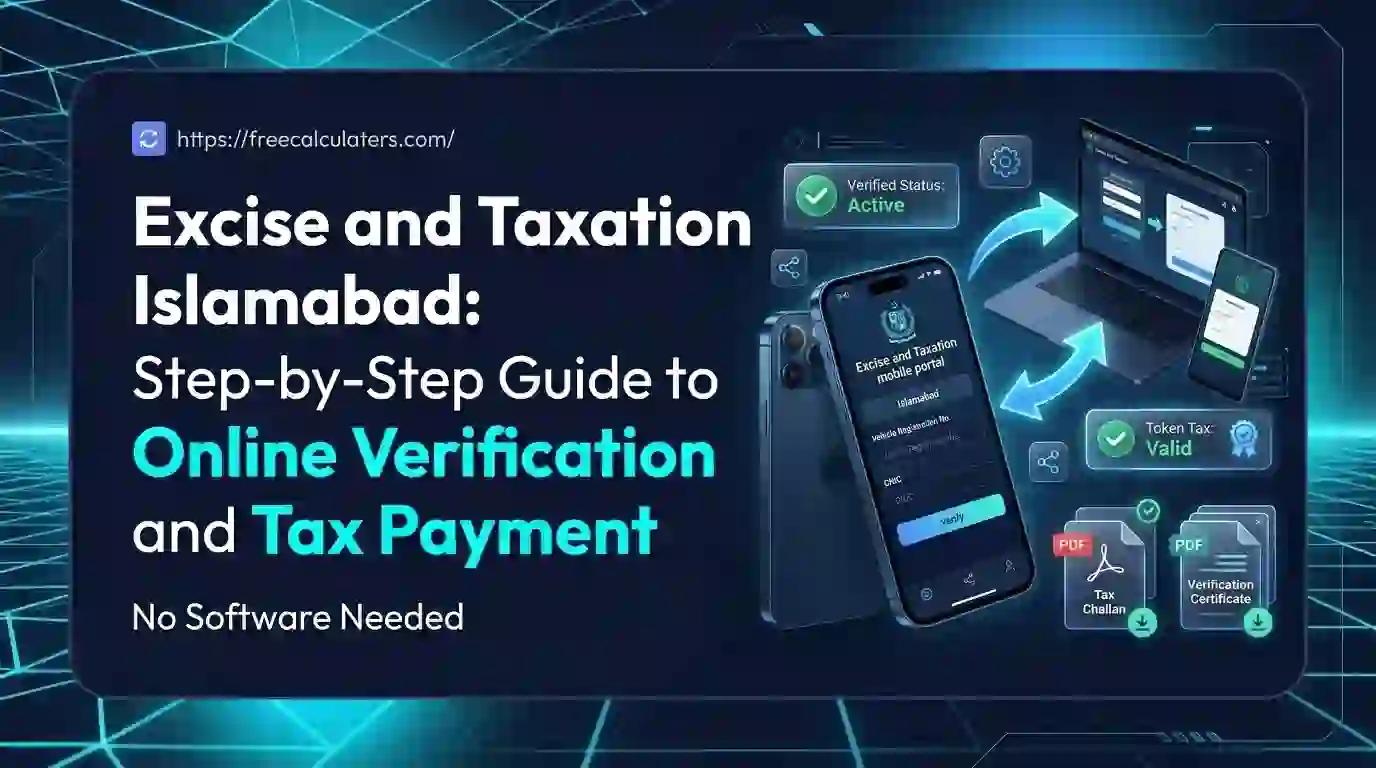
If you own a vehicle in Islamabad, you've probably heard people complain about long queues at the excise office. The good news is that those days are mostly over. The Excise and Taxation Department Islamabad has moved almost every major service online, so you can verify a vehicle, check your token tax, and pay it without ever standing in a line.
This guide walks you through the entire process — from what the department actually does, to verifying a vehicle before you buy it, to paying your token tax in a few clicks. Whether you're a first-time car owner in the capital or you just want to double-check a used bike before handing over cash, you'll find everything you need here.
What Is the Excise and Taxation Department Islamabad?
The Excise and Taxation Department, Islamabad, is the government body under the Islamabad Capital Territory (ICT) Administration responsible for vehicle registration, token tax collection, ownership transfers, and property tax assessment within the capital. It also collects other provincial-style levies such as professional tax, entertainment duty, and education cess.
In simple terms: if it involves your car's registration, your annual vehicle tax, or your property's tax bill in Islamabad, this department is behind it. The office is located in Sector G-6/1-2, and it operates as the Motor Registration Authority for all ICT-registered vehicles.
Over the past few years, the department has pushed hard into digital services. According to recent estimates, more than 60% of Islamabad vehicle owners now use the online portal instead of visiting the office in person, which has noticeably reduced waiting times and paperwork delays.
Why Online Verification and Tax Payment Actually Matter
It's easy to think of this as "just another government process," but skipping it can cost you real money and real trouble.
- Buying a used vehicle? Verification confirms the seller's claims about ownership, registration status, and pending dues before you pay a single rupee.
- Unpaid token tax blocks ownership transfer. You can't legally transfer a vehicle with outstanding dues.
- Late payments come with penalties. Fines typically accrue monthly once the due date passes, and they add up faster than most people expect.
- Fraud prevention. Verifying chassis and engine numbers against official records protects you from buying a stolen or tampered vehicle.
If you're also trying to understand how your tax bracket affects vehicle costs, it helps to know your filer vs non-filer status, since non-filers typically pay a higher rate on vehicle-related taxes in Pakistan.
Step-by-Step Guide: Excise and Taxation Islamabad Online Verification
Verifying a vehicle online in Islamabad is genuinely quick once you know where to look. Here's the process broken down into clear steps.
Step 1: Go to the official portal Visit the official Excise and Taxation Islamabad website at islamabadexcise.gov.pk. This is the only site you should trust for official information — the department itself warns that unofficial third-party sites are not reliable sources for verification data. You can also use the City Islamabad App, available on both Android and iOS.
Step 2: Find the vehicle verification section On the homepage, look for "Vehicle Verification" or "Online Verification." The layout is designed to be simple, even if it's your first time using it.
Step 3: Enter your vehicle details Type in the vehicle registration number exactly as it appears on the registration book. Some checks also ask for the chassis number as an added security layer, so keep your documents nearby.
Step 4: Complete CNIC verification For security, the system may ask for the owner's CNIC number. This step exists specifically to stop unauthorized people from pulling up someone else's private vehicle data.
Step 5: Review the results Once submitted, the portal displays the owner's name, vehicle make and model, registration date, token tax status, and any pending dues. Take a screenshot or print this page — it's useful proof if a dispute comes up later.
This entire process usually takes under five minutes, compared to the half-day trip it used to require at the physical office.
Step-by-Step Guide: Paying Token Tax Online in Islamabad
Token tax is the annual fee every vehicle owner in Islamabad must pay to keep their vehicle legally on the road. It's calculated based on engine capacity and vehicle category — cars, motorcycles, and commercial vehicles all fall into different brackets.
Here's how to pay it online, step by step:
- Open the City Islamabad App or the ICT Excise portal. Register with your name, CNIC, and email if you haven't already. You'll receive a verification code by email to complete registration.
- Navigate to the Token Tax section under Excise and Taxation Services.
- Enter your vehicle registration number. The system will pull up your vehicle details along with your FBR filer or non-filer status, since this affects your final amount.
- Generate a PSID (Payment Slip ID). This unique code is what links your payment to your vehicle record.
- Choose a payment method. You can pay through 1Link, e-Sahulat, mobile banking apps like JazzCash or Easypaisa, or a debit/credit card.
- Complete the payment. Enter the PSID in your banking app of choice, confirm, and you're done.
- Save your digital receipt. Most transactions generate an SMS alert and email confirmation automatically, so you have a record without needing a physical copy.
If you want to estimate your amount before you even open the portal, our Islamabad token tax calculator gives you a quick estimate based on your vehicle's engine capacity, so there are no surprises at payment time.
When Is Token Tax Due?
Token tax is due annually, typically on the anniversary of your vehicle's registration date. So if your car was registered on June 15, your tax is due by June 15 every year going forward. Missing this date triggers a monthly late fee, and unpaid dues will also block any future ownership transfer — so it's worth setting a calendar reminder.
For a broader comparison of how token tax rates differ depending on where your vehicle is registered, this province-wise car token tax guide is a useful reference, since Islamabad's rates don't always match Punjab or Sindh.
Documents You'll Need
Before you start either process, have these ready:
- Vehicle registration number
- Chassis and/or engine number (for verification)
- CNIC of the registered owner
- Registration book (for cross-checking details)
- A working mobile number and email (for OTPs and receipts)
Missing even one of these can stall the process, so it's worth gathering everything before you log in.
MTMIS Islamabad: What It Is and How It Fits In
You'll often see the term MTMIS Islamabad mentioned alongside online verification. MTMIS stands for Motor Transport Management Information System — it's essentially the backend vehicle-record system that powers verification checks. When you verify a vehicle through the official ICT Excise portal, you're pulling data from this same underlying record system, which shows ownership history, smart card status, and biometric verification status.
Property Tax in Islamabad: A Quick Overview
Vehicles aren't the only thing this department handles. If you own property in Islamabad, you're also required to pay Urban Immovable Property Tax, assessed and collected through the same Excise and Taxation Department. The amount depends on your property's location, size, and category.
If you want to estimate your liability ahead of time, our Pakistan property tax calculator can give you a starting figure before you check the official assessment.
Common Mistakes to Avoid
- Entering CNIC or registration numbers incorrectly. Even a single digit error can delay your record or generate the wrong PSID.
- Missing your token tax due date. Set an SMS or calendar reminder — penalties start accumulating quickly.
- Using unofficial "verification" websites. Only trust the official portal or the City Islamabad App; third-party sites can display outdated or inaccurate information.
- Losing your registration book without reporting it. If this happens, apply for a duplicate immediately rather than waiting.
- Ignoring your filer status. Your FBR filer/non-filer status directly affects your token tax amount, so it's worth confirming your status through the FBR IRIS portal if you're unsure where you stand.
How This Fits Into Pakistan's Broader Digital Tax Push
Islamabad's shift toward online excise services isn't happening in isolation. It mirrors a nationwide effort by the Federal Board of Revenue (FBR) to digitize tax collection and reduce reliance on in-person processes. If you're new to Pakistan's tax system in general, it's worth understanding how to become a tax filer, since your filer status affects far more than just vehicle tax — it touches property transactions, banking, and more. You can find further departmental details directly on the ICT Administration's official Excise and Taxation page.
Frequently Asked Questions
What is token tax in Islamabad? Token tax is an annual fee charged to vehicle owners in Islamabad, calculated based on the vehicle's engine capacity and category. It functions as a form of road tax and must be renewed every year to keep the vehicle legally operational.
Can I pay token tax online in Islamabad? Yes. You can pay through the City Islamabad App or the official ICT Excise portal using 1Link, e-Sahulat, mobile banking apps like JazzCash and Easypaisa, or a debit/credit card.
How do I verify a vehicle before buying it in Islamabad? Visit the official Excise and Taxation Islamabad portal, enter the vehicle's registration number and chassis number, complete CNIC verification if prompted, and review the ownership and tax status shown on screen.
What happens if I pay token tax late in Islamabad? Late payment attracts a monthly penalty that increases the longer the tax remains unpaid. Outstanding dues also block ownership transfer until they're cleared.
Is token tax refundable in Islamabad? No, token tax is generally non-refundable once paid, since it's charged for the right to operate the vehicle on public roads for that tax year.
What is MTMIS Islamabad? MTMIS (Motor Transport Management Information System) is the vehicle records database that powers online verification in Islamabad. It stores ownership history, registration details, and smart card status for registered vehicles.
What is a PSID and why do I need one? A PSID (Payment Slip ID) is a unique code generated by the excise portal that links your payment to your specific vehicle record. You enter this code in your banking app to complete a token tax payment.
Final Thoughts
Managing your vehicle and property tax obligations in Islamabad no longer requires a trip to G-6. Between the official portal, the City Islamabad App, and mobile banking integration, most people can verify a vehicle or pay their token tax in under ten minutes. The key is staying organized — keep your documents handy, note your due date, and always use the official government channels rather than third-party sites claiming to offer the same service.
If you'd like to check your exact token tax amount before you pay, try the Islamabad token tax calculator — it takes the guesswork out of the process and helps you budget ahead of your renewal date.