If you've ever tried to open a business bank account in Pakistan, bid for a government contract, or simply file your income tax return, you've likely run into one requirement that comes up again and again: your NTN. For something so central to formal financial life in Pakistan, it's surprising how many people still aren't entirely sure what it is, whether they already have one, or how to get one if they don't.
The short answer is that an NTN, or National Tax Number, is your official identity within Pakistan's tax system. But there's more nuance to it than that single sentence suggests, especially since the process changed with the rollout of IRIS 2.0 and confusion still persists around whether your CNIC counts as your NTN automatically.
This guide walks through exactly what an NTN is, who needs one, how to get it, and the common mistakes that delay registration, so you can get this sorted correctly the first time.
What Is an NTN (National Tax Number)?
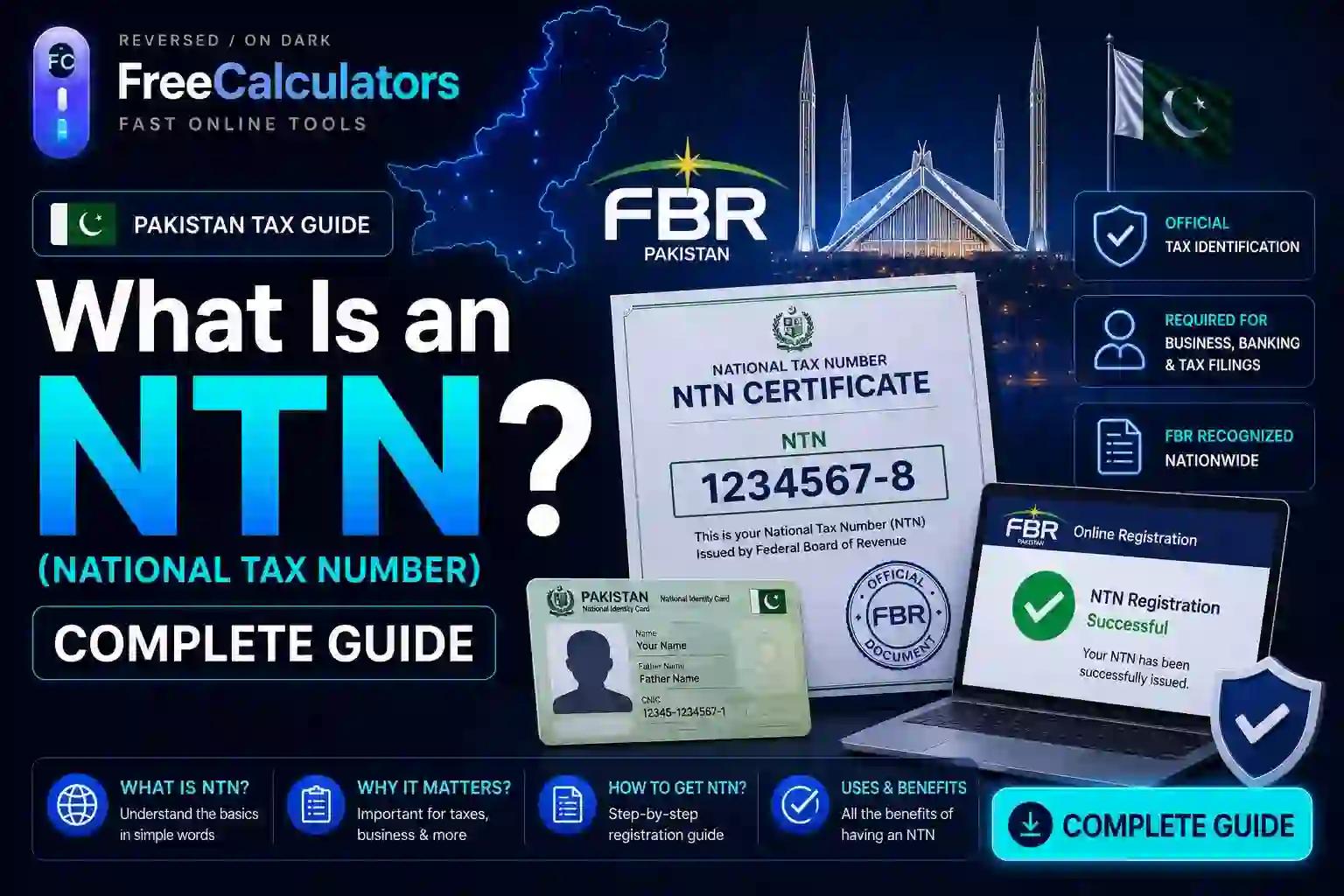
An NTN is a unique identification number issued by Pakistan's Federal Board of Revenue (FBR) to individuals, sole proprietors, companies, and Associations of Persons (AOPs). It serves as your official identity within Pakistan's tax system and is required for filing income tax returns, opening business bank accounts, registering for sales tax, importing or exporting goods, bidding on contracts, and carrying out most formal financial transactions.
Think of your NTN as the tax equivalent of your CNIC: a unique reference number that lets the government track your financial activity, income, and tax compliance over time.
Is NTN the Same as CNIC?
This is one of the most common points of confusion, and the answer is: partly.
For individuals, your 13-digit CNIC number itself functions as your NTN. You don't get a separate, entirely different number. However, and this is the part people often miss, your CNIC only counts as an active NTN once you've registered on the FBR IRIS portal and activated your tax profile. Simply having a CNIC does not automatically register you in the tax system.
For companies and Associations of Persons (AOPs), the situation is different. These entities are issued a unique, separate NTN by the FBR that is distinct from any individual's CNIC, since a company obviously doesn't have a CNIC of its own.
So the short version: your CNIC becomes your NTN once activated, but it takes a deliberate registration step, it's not automatic just because you have a national ID card.
Who Needs an NTN in Pakistan?
You need an NTN if you fall into any of these categories:
- Salaried individuals earning above the taxable income threshold
- Freelancers and self-employed professionals earning income in Pakistan
- Business owners and sole proprietors
- Companies and registered businesses
- Associations of Persons (AOPs), such as partnerships
- Property owners conducting property transactions
- Anyone holding significant bank deposits that trigger reporting requirements
- Online sellers, including those setting up seller accounts on platforms like Daraz, which typically require a valid NTN for business registration
Under the Income Tax Ordinance, 2001, essentially anyone earning income above the taxable threshold or conducting formal business activity in Pakistan is expected to register.
Why You Need an NTN: The Real-World Benefits
Beyond simply being a legal requirement, having an active NTN and becoming a registered tax filer comes with tangible financial advantages. Filers in Pakistan benefit from significantly reduced withholding tax rates, often around 50% lower than what non-filers pay, on everyday transactions like banking activity, vehicle registration, and property transfers.
If you've ever wondered why two people with the same income pay dramatically different amounts of tax on the same car purchase or property transfer, filer status, which starts with having an active NTN, is usually the answer. Our detailed breakdown of filer vs. non-filer status in Pakistan covers exactly how much this difference can add up to across different transaction types.
How to Get an NTN Number in Pakistan (Step-by-Step)
Getting your NTN is entirely free and done online through the FBR IRIS portal. Here's the process:
Step 1: Gather Your Documents
Before starting, have these ready:
- CNIC (front and back), scanned copy in JPG or PDF format
- An active mobile number registered in your own name with NADRA (this is critical, more on this below)
- A valid email address
- For businesses/AOPs: partnership deed, utility bill of the business premises, and bank account details
Step 2: Visit the IRIS Portal
Go to iris.fbr.gov.pk, the FBR's official online tax portal, and click "Registration for Unregistered Person."
Step 3: Complete Form 181
Enter your CNIC number, then verify the codes sent to your NADRA-registered mobile number and email address. This is where most registration failures happen, so double-check that your SIM is biometrically verified and registered under your own name before proceeding.
Step 4: Fill in Personal and Contact Details
Complete the required fields accurately. Your name must match your CNIC exactly, mismatched details are one of the most common causes of application rejection.
Step 5: Register Your Business (If Applicable)
If you're registering a business alongside your individual profile, look for the "Business" tab next to "Property" before submitting. From there, you can:
- Add your business name
- Set your acquisition date (the date you started the business)
- Select your principal business activity from the search bar (e.g., "Retail Trade" or "Software Development")
Step 6: Submit and Set a Password
Once everything is verified, complete the captcha, set your password, and submit the form.
For individuals with all documents ready, this entire process typically takes 20 to 30 minutes, and registration is usually processed within a working day or two. Business, AOP, and company registrations take longer since the FBR verifies supporting documents more thoroughly, and any error in the submission means restarting the correction process.
If you'd like a broader walkthrough of the portal itself beyond just registration, our guide on what the FBR IRIS portal is and how tax filing works in Pakistan covers the full system, including IRIS 2.0's updated interface.
Is NTN Registration Free?
Yes. Registering for an NTN through the FBR IRIS portal carries no official government fee. It's entirely free if you complete the process yourself. That said, many people choose to pay a third-party tax consultant or filing service to handle the registration on their behalf, which typically costs a modest fee, but this is optional, not a government requirement.
Common Reasons NTN Registration Fails
If your registration keeps getting rejected or stuck, it's almost always one of these issues:
- Unregistered or already-used mobile number — Your SIM must be biometrically verified and registered under your own CNIC with NADRA. Using someone else's number, or a number already linked to another FBR registration, is the single most common cause of failure.
- Name mismatch — Your name on the form must match your CNIC exactly, including spelling and spacing.
- Incomplete documents — Missing scanned copies or unclear images delay processing significantly.
- Wrong application type — Make sure you select "Registration for Unregistered Person" if you don't already have an NTN, choosing the wrong category creates unnecessary complications.
- Outdated contact information — An inactive email or unreachable mobile number can cause you to miss verification codes entirely.
Does Getting an NTN Make You a Tax Filer?
No, and this is one of the most misunderstood parts of the entire process. Getting an NTN only registers you within the tax system, it does not automatically make you a "filer."
To actually become a filer and appear on the FBR's Active Taxpayer List (ATL), which is what unlocks the lower withholding tax rates, you must go a step further and file your income tax return. Registration is step one; filing is step two, and both are necessary to get the full benefit.
If you're unsure how to move from simply being registered to actually filing your return, our step-by-step FBR IRIS income tax return guide walks through exactly that process.
How to Check and Verify Your NTN
Once you've registered, you can verify your status in a few ways:
- Check the Active Taxpayer List (ATL): Enter your CNIC or NTN number on the FBR's ATL portal to confirm whether your registration is active and valid.
- Log in to IRIS: Individuals use their 13-digit CNIC (no dashes) as the username; companies and AOPs use their 7-digit NTN.
- Use the Tax Asaan mobile app: This companion app offers a simplified, wizard-based version of the same registration and filing process, along with the FBR-Maloomat view of your digital tax profile.
Keeping your NTN status updated and verified regularly helps you avoid penalties and confirms your standing before any major financial transaction, like a property purchase or vehicle registration, where filer status matters most.
How to Download Your NTN Certificate
After successful registration, you can download your official NTN certificate directly from the IRIS portal:
- Log in to iris.fbr.gov.pk using your CNIC or NTN credentials
- Navigate to the registration or profile section
- Locate the option to view or download your certificate
- Download the PDF for your records
Note that while a temporary NTN is often available the same day through certain registration channels, the permanent printed NTN certificate from FBR can take approximately 7 to 10 working days to process fully.
NTN for Freelancers and Online Sellers
Freelancers earning income in Pakistan, whether through international clients or local projects, are required to register for an NTN just like traditionally employed individuals. This applies whether you're doing content writing, software development, design work, or any other freelance service. Our dedicated guide on freelancer income tax rules in Pakistan under FBR covers the specific tax obligations freelancers face beyond just registration.
Similarly, if you're setting up a seller account on an e-commerce platform like Daraz, a valid NTN is typically required as part of the business registration process, since these platforms need to verify your formal tax status before approving a seller account.
NTN Registration for Businesses, AOPs, and Companies
While individual registration is fairly straightforward, business, AOP, and company registrations involve a few extra layers:
- Sole proprietors register under their own CNIC/NTN but add business details through the Business tab, as outlined earlier.
- AOPs (partnerships) require CNIC copies of all partners, a partnership deed, and the business premises' utility bill.
- Companies are issued a distinct, separate NTN from any individual, since the company itself is treated as its own legal tax entity.
Business and company registrations generally take longer to process because FBR verifies supporting documentation more closely, and if you're also planning to register for sales tax alongside your NTN, it's worth understanding how sales tax differs from income tax in Pakistan before you begin, since they're separate registrations with different requirements.
What Happens If You Don't Get an NTN?
If you're legally required to have an NTN and don't register, you remain classified as a non-filer, which comes with real financial consequences:
- Higher withholding tax rates on banking transactions, vehicle purchases, and property transfers, often close to double what filers pay
- Difficulty opening business bank accounts, since most banks require an NTN for business account setup
- Inability to bid on government or corporate contracts, many of which require proof of tax registration
- Potential penalties for non-compliance if your income clearly exceeds the taxable threshold
For most people earning a formal income in Pakistan, the financial downside of staying unregistered outweighs the relatively small time investment it takes to register.
IRIS 2.0: What's Changed
The current version of the FBR's portal, IRIS 2.0, brought a cleaner interface, faster processing, and better mobile support compared to the older system. One notable feature is that IRIS 2.0 now pre-populates parts of your tax return using data the FBR already holds, including property records, vehicle registrations, utility connections, and bank withholding information.
This is worth knowing because it means omitting an asset the government already has on file is far more likely to trigger a mismatch or flag than it used to be. Accuracy when registering and filing matters more now than in earlier versions of the system.
Frequently Asked Questions
What is an NTN in Pakistan? An NTN, or National Tax Number, is a unique identification number issued by the Federal Board of Revenue (FBR) to individuals, businesses, and organizations, serving as their official identity within Pakistan's tax system.
Is NTN the same as CNIC? For individuals, your CNIC number itself serves as your NTN, but it must be registered and activated through the FBR IRIS portal before it functions as an official tax registration. Companies and AOPs are issued a separate, distinct NTN.
How do I get my NTN number in Pakistan? You register for free through the FBR IRIS portal at iris.fbr.gov.pk by completing Form 181 with your CNIC, verifying your NADRA-registered mobile number and email, and submitting your details.
Is NTN registration free? Yes, registering for an NTN through the official FBR IRIS portal carries no government fee. Some people choose to pay a tax consultant for assistance, but this is optional.
Does getting an NTN make me a tax filer? No. An NTN only registers you within the tax system. You become a filer, and appear on the Active Taxpayer List, only after you file your income tax return.
How long does it take to get an NTN? Individual registration is typically processed within a working day or two if all documents are correct. Business, AOP, and company registrations usually take longer due to additional document verification.
Final Thoughts: Getting Your NTN Right the First Time
An NTN might seem like just another piece of bureaucratic paperwork, but it's genuinely the foundation of formal financial life in Pakistan, from opening a business account to unlocking lower withholding tax rates as a filer. The process itself is free and, for most individuals, can be completed in well under an hour if your documents are in order and your mobile number is properly verified with NADRA.
The two mistakes worth avoiding most: don't assume your CNIC automatically counts as an active NTN without registering on IRIS, and don't assume that registering alone makes you a filer, you still need to file your return to unlock the real financial benefits.
According to the Federal Board of Revenue's official guidance, keeping your registration details accurate and up to date remains the taxpayer's responsibility, so it's worth revisiting your profile periodically, especially after IRIS 2.0's move toward pre-populated return data.
Ready to see exactly how your filer status affects your tax bill? Try our free Income Tax Calculator to compare your filer versus non-filer liability, or explore our full suite of Pakistan tax tools to check withholding rates, salary tax, and more in one place. Explore Advanced Free Tools offered by Free Calculators and take the next step toward becoming a fully registered, compliant taxpayer.