
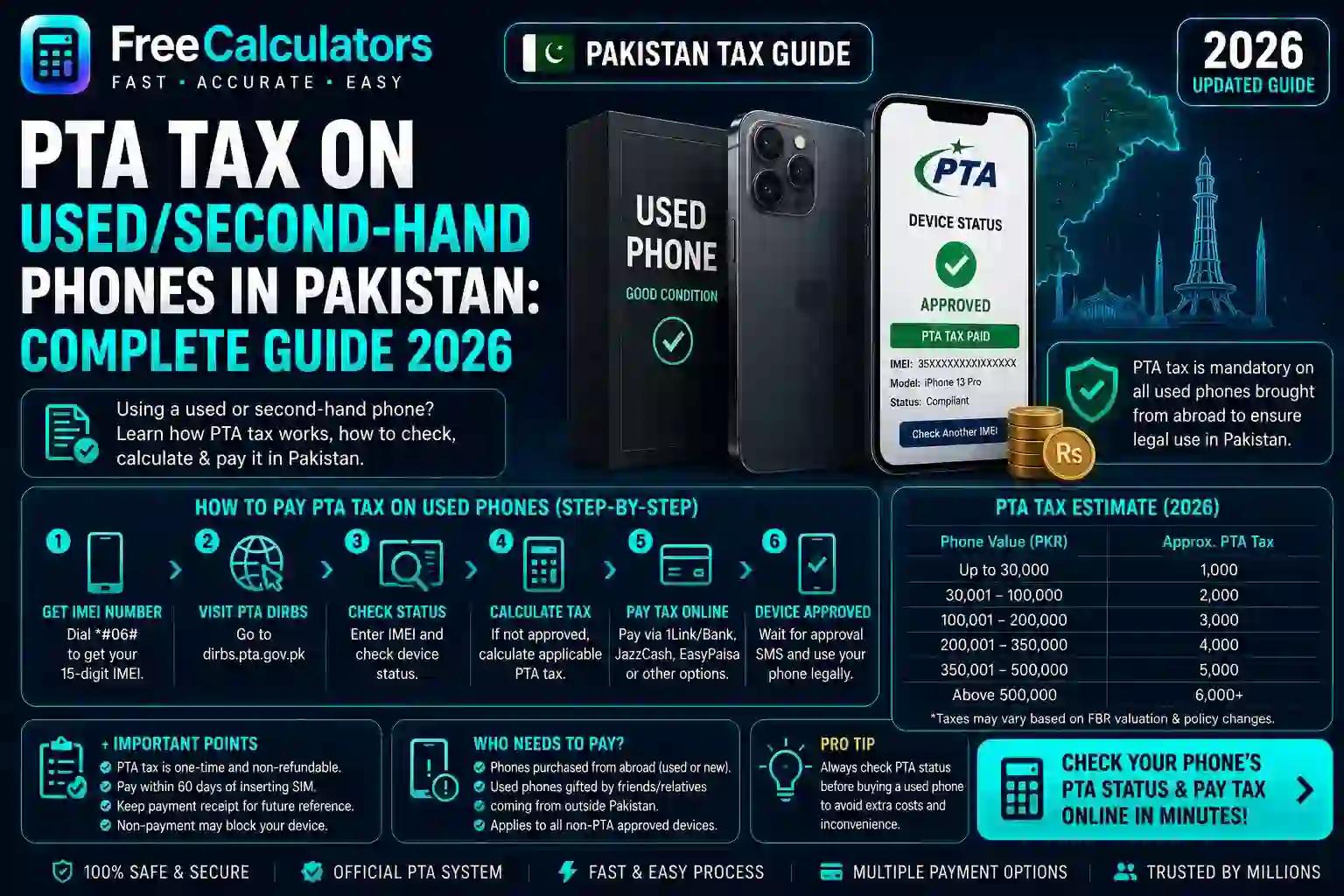
Buying a used iPhone or Samsung from a friend, an online marketplace, or a relative visiting from abroad seems simple — until the phone shows "Non-PTA Compliant" and your SIM stops working within days. This single issue trips up thousands of buyers across Pakistan every month, and it usually comes down to one thing: PTA tax was never paid on that device.
This guide walks through exactly how PTA tax works for used and second-hand phones specifically, how it differs from tax on brand-new imports, the registration process step by step, and the practical questions people actually run into — like buying a used phone that isn't registered yet, or what happens if you simply don't pay. Given that exact tax figures and DIRBS rules do shift periodically, this guide focuses on the process, structure, and factors that determine your tax amount, and flags clearly where you should verify current numbers directly from PTA before paying anything.
What Is PTA Tax and Why Does It Exist?
PTA tax is the mobile registration duty and tax collected by the Pakistan Telecommunication Authority, working alongside the Federal Board of Revenue (FBR), before a phone's IMEI is approved to work permanently on Pakistani mobile networks. It applies to phones brought into the country — whether by travelers, imported commercially, or purchased used from someone who imported it.
The system runs through DIRBS (Device Identification, Registration, and Blocking System), which checks every phone's unique IMEI number against a national database. If a phone isn't registered and its tax isn't paid, DIRBS eventually blocks that device from using any local SIM card, regardless of who owns it or how it was acquired.
The reasoning behind this system is straightforward from a regulatory standpoint: it closes a loophole where phones were being brought into Pakistan without paying applicable customs duty or sales tax, and it also serves as an anti-theft and anti-smuggling measure, since a blocked IMEI can't simply be resold and reactivated on a local network.
PTA Tax on Used Phones vs New Phones: What's Actually Different?
This is one of the more misunderstood parts of the system. The tax itself isn't calculated differently because a phone is "used" versus "new" in a separate rate structure — it's based primarily on the device's model and value. What actually differs is the registration path and who's responsible for paying it.
New phones imported commercially typically have tax paid by the importer or retailer before the phone ever reaches a customer, so the buyer often never interacts with PTA tax directly.
Phones brought in by travelers get a specific allowance — historically, travelers have been permitted to bring in phones under certain conditions with reduced or waived tax within a set timeframe of their arrival, though the exact allowance and conditions are worth confirming directly on PTA's official passenger guidelines before relying on them.
Used/second-hand phones bought locally are where confusion is most common. If the previous owner already registered and paid tax on the device, ownership can typically transfer without additional tax. If they didn't, the new owner inherits that unresolved status, and the phone remains a "non-compliant" device on DIRBS until tax is paid — regardless of the fact that the current owner didn't personally import it.
This last point is exactly why checking a phone's registration status before buying it used is genuinely one of the most important steps in any second-hand phone purchase in Pakistan.
How to Check If a Used Phone Is PTA Approved Before Buying
Before handing over money for any second-hand phone, verify its status using the device's IMEI number. Here's the practical process:
- Find the IMEI number. Dial
*#06#on the phone itself, or check the box/receipt if available. Most phones have two IMEI numbers (dual SIM), so note both. - Send the IMEI via SMS to PTA's official DIRBS SMS check number, or use the DIRBS web portal directly.
- Read the response carefully. It will show one of a few statuses: compliant/approved (already registered and taxed), non-compliant (needs registration and tax payment), or blocked (already flagged, meaning it can't legally be used on a local network).
- If non-compliant, ask who's responsible. Some sellers factor unpaid PTA tax into a lower asking price, which is fine as long as the buyer understands they'll need to pay it separately after purchase.
Skipping this step is the single most common mistake in used phone transactions across Pakistan — buyers assume a working SIM at the point of sale means the phone is registered, when in reality, phones can function for a limited grace period before DIRBS actually blocks them.
Step-by-Step: How to Register a Used Phone and Pay PTA Tax
Once you've confirmed a phone needs registration, here's the general process for getting it compliant.
Step 1: Gather Required Documents
You'll typically need your CNIC (for Pakistani residents) or passport (for overseas Pakistanis and foreign nationals), along with the phone's IMEI number(s) and proof of purchase if available, though not always strictly required for the registration step itself.
Step 2: Calculate the Applicable Tax
PTA tax amounts are determined by the phone's declared or assessed value, which generally correlates with the specific model. Higher-end flagship devices (recent iPhone Pro Max models, top-tier Samsung Ultra devices) fall into higher tax brackets than budget or mid-range Android phones. Because these brackets and rates are revised periodically by FBR and PTA, the only reliable way to get an accurate figure for a specific model is checking PTA's official tax calculator or the DIRBS portal directly at the time of registration, rather than relying on a number seen months earlier.
Step 3: Register the Device on the DIRBS Portal
Registration happens through PTA's official DIRBS system, accessible online. You'll submit the IMEI, your CNIC or passport details, and select the registration category that applies to your situation (resident registering a phone, overseas Pakistani, etc.).
Step 4: Pay the Assessed Tax
Once registration is submitted, the system generates a tax amount specific to that device. Payment can typically be made through the methods PTA lists on its portal at the time — bank options and online payment channels have been added and updated over time, so checking the current accepted methods directly on the portal avoids relying on outdated payment instructions.
Step 5: Confirm Compliance Status
After payment is processed, recheck the IMEI status through the same SMS or web method used earlier. A status change to "compliant" confirms the phone is now properly registered and won't be blocked from network access.
What Happens If You Don't Pay PTA Tax?
Ignoring PTA registration doesn't make the requirement disappear — it just delays the inevitable. Phones that remain unregistered past the compliance window eventually get their IMEI blocked from all Pakistani mobile networks. Practically, that means:
- The phone can no longer make calls, send texts, or use mobile data through any local SIM.
- WiFi-only functions (browsing, apps not requiring a SIM) generally still work, but the phone loses its core purpose as a mobile device.
- Reselling a blocked phone becomes extremely difficult, since any buyer who checks the IMEI (which they should) will see the blocked status immediately.
There's no meaningful workaround once a device is blocked other than completing registration and paying the applicable tax — at which point the block is typically lifted.
PTA Tax Payment: Installments and Practical Considerations
A common question is whether PTA tax can be paid in installments, particularly for higher-value flagship phones where the tax amount is substantial. Payment structure and any installment options are determined by PTA and the payment channels they've integrated with at any given time, so this is genuinely worth confirming directly through the official portal rather than assuming based on older information, since these arrangements have shifted over past registration cycles.
Transferring PTA Registration to a New Owner
If you're buying a used phone that's already PTA-compliant, ownership of the physical device transfers normally through the sale itself — PTA's compliance record is tied to the IMEI's registration status, not a specific individual's ongoing ownership in most cases. This means a properly registered phone generally continues working for whoever owns it next, without requiring a separate "transfer" process through PTA.
Where this gets more complex is when a phone was registered using someone else's CNIC or passport and later becomes relevant for warranty, insurance, or any dispute — keeping the original bill of sale or transfer documentation is a reasonable practical precaution, even if not strictly enforced by PTA for basic network compliance.
Comparing Registration Paths: CNIC vs Passport
| Registration Type | Who Uses It | Key Consideration |
|---|---|---|
| CNIC-based registration | Pakistani residents | Standard path for most local buyers and sellers of used phones |
| Passport-based registration | Overseas Pakistanis, foreign nationals, travelers | Often tied to specific traveler allowances and timeframes worth confirming on arrival |
Choosing the correct registration path matters because selecting the wrong one can complicate the process or affect which allowances (if any) apply to your specific situation.
Common Mistakes Buyers Make With Used Phones and PTA Tax
A few patterns show up again and again in second-hand phone transactions across Pakistan, and nearly all of them are avoidable with one extra step.
Trusting a working SIM as proof of compliance. Non-compliant phones often work for a period before DIRBS flags and blocks them, which misleads buyers into thinking a phone is registered simply because it functioned normally during the sale.
Not checking IMEI status before finalizing payment. This single five-minute check, done before money changes hands, prevents the vast majority of disputes that come up afterward.
Assuming price alone reflects registration status. A used phone priced noticeably below market rate is sometimes explained by an unpaid PTA tax that the buyer will need to cover separately — always ask directly rather than assuming the lower price includes compliance.
Registering under the wrong document type. Using a passport-based registration path when CNIC-based registration was the correct option (or vice versa) can create avoidable complications during the process.
Waiting until the compliance deadline to act. Since blocked phones require completing the same registration process anyway, there's no advantage to delaying — and a blocked phone becomes a much harder sell if you decide to resell it before resolving the tax.
A Practical Example: Buying a Used iPhone From an Online Marketplace
Consider someone in Lahore who finds a used iPhone listed on a local marketplace app at a price that seems reasonable for the model and condition. Before agreeing to buy, they ask the seller for the IMEI number and run a DIRBS check — the response comes back non-compliant.
Rather than walking away or assuming the phone is fraudulent, the buyer has a straightforward conversation with the seller: either the seller reduces the price to account for the unpaid tax and the buyer registers it themselves after purchase, or the seller agrees to complete registration before the sale finalizes. Both are reasonable outcomes — what matters is that the compliance status was identified before money changed hands, not after the buyer discovered a blocked phone with no recourse. This single verification step is the difference between a smooth transaction and a costly mistake.
How PTA Tax Fits Into Pakistan's Broader Tax System
PTA tax on phones isn't an isolated fee — it connects to Pakistan's broader customs duty and sales tax framework administered through FBR. Anyone navigating this space regularly, particularly resellers or frequent importers, benefits from understanding how it relates to standard import duty in Pakistan more generally, since the underlying assessment principles (declared value, applicable duty brackets) follow similar logic across different imported goods categories.
For those trying to understand how this fits into the wider tax filing picture — particularly if you're a registered taxpayer wondering how imported devices intersect with your annual filing — our guide on filer vs non-filer tax status in Pakistan is worth reading, since filer status can affect duty rates on various imported goods depending on current FBR policy.
If you're registering a phone and want to understand the broader FBR ecosystem your payment feeds into, our explainer on what the FBR IRIS portal is provides useful context on how Pakistan's tax administration connects across different duty and tax categories.
Why Verify Current Rates Before Paying
It's worth being direct about something many guides gloss over: PTA tax rates and DIRBS policies get revised periodically by both PTA and FBR, sometimes with meaningful changes to specific phone-model brackets. A rate that was accurate six months ago may no longer reflect the current assessed amount for a given device.
The only reliable approach is checking the amount directly through PTA's official DIRBS portal or tax calculator at the time you're actually registering, rather than relying on a number remembered from a friend's experience or an older article. This single habit avoids both underpaying (which delays compliance) and being caught off guard by an unexpectedly higher figure.
Frequently Asked Questions
How much is PTA tax on a used phone? The amount depends on the specific phone model and its assessed value, with flagship devices falling into higher tax brackets than budget models. Because rates are revised periodically, checking PTA's official DIRBS tax calculator for your exact model at the time of registration gives the most accurate current figure.
How do I register a second-hand phone with PTA? Check the IMEI status first via DIRBS, then submit your CNIC or passport along with the IMEI through PTA's official registration portal, pay the assessed tax through an approved payment method, and recheck the status to confirm compliance.
Can I use a non-PTA registered phone in Pakistan? Non-compliant phones may work temporarily but will eventually be blocked from all local mobile networks by DIRBS. WiFi-only functions typically continue working, but SIM-based calls, texts, and mobile data will stop.
Does PTA tax apply to phones already registered by the previous owner? If the previous owner completed registration and paid the applicable tax, the phone's compliant status generally transfers with ownership, since DIRBS compliance is tied to the IMEI rather than a specific person.
What happens if I don't pay PTA tax on my phone? The device's IMEI eventually gets blocked from all Pakistani mobile networks, and the only resolution is completing registration and paying the assessed tax, after which network access is typically restored.
Can PTA tax be paid in installments? Available payment structures and any installment options depend on PTA's current payment channel integrations, which have changed over past registration cycles — checking the official DIRBS portal directly gives the accurate, current answer for your situation.
Final Takeaway: Verify Before You Buy, Register Before You're Blocked
The core lesson across every scenario in this guide is the same: check the IMEI status before any used phone purchase, and don't delay registration if a phone comes back non-compliant. A five-minute DIRBS check protects you from inheriting someone else's unresolved tax liability, and prompt registration keeps a phone functional rather than risking a network block down the line.
For the most current tax brackets and payment methods specific to your device, always confirm directly through PTA's official DIRBS portal rather than relying on figures from any third-party source, including this guide — rates and procedures are revised periodically, and getting the current number right the first time saves both time and unnecessary complications.
If you're navigating Pakistan's broader tax landscape beyond just phone registration — income tax, sales tax, or vehicle-related duties — explore the full range of tax calculators available to help you plan and verify amounts before you pay.