
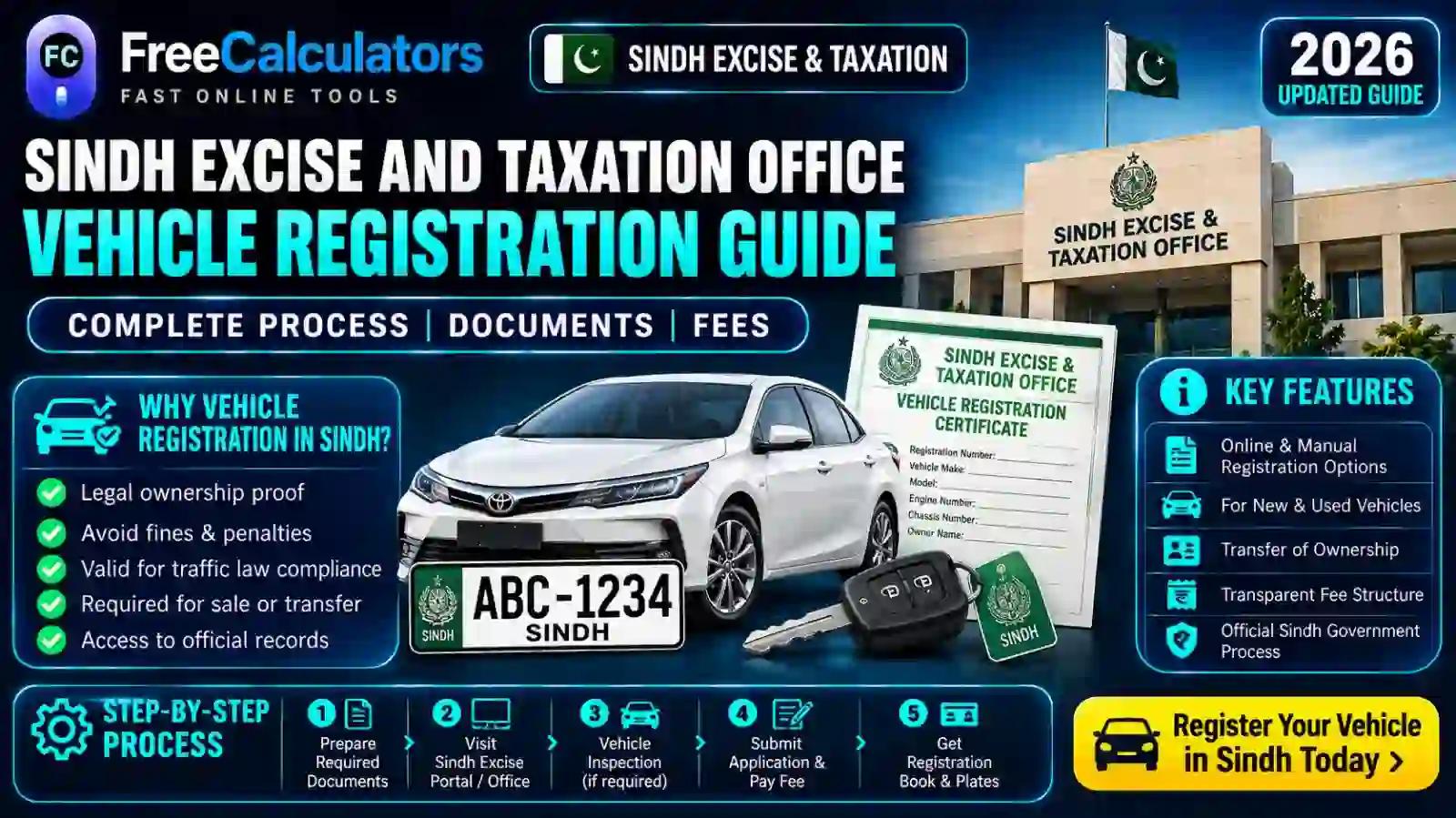
If you've just bought a new vehicle in Sindh, it isn't legally yours to drive on public roads until it's registered with the Excise, Taxation and Narcotics Control Department. Registration typically requires the vehicle's sale invoice, your CNIC, a filled application form, and payment of the applicable registration fee and token tax — a process that usually takes anywhere from a few days to about two weeks depending on whether you're registering through a dealer or applying directly.
That's the short version. But vehicle registration in Sindh has its own quirks compared to Punjab or Islamabad — different biometric requirements, a different fee structure tied to engine capacity, and a digital verification system (MTMIS Sindh) that plays a bigger role than most first-time buyers expect. This guide walks through the entire registration process step by step, explains how it differs from an ownership transfer, and flags the mistakes that most commonly delay applications at the Excise office.
What the Sindh Excise and Taxation Department Actually Does
The Excise, Taxation and Narcotics Control Department is the provincial body responsible for collecting motor vehicle tax, property tax, and professional tax across Sindh, alongside its narcotics enforcement mandate. For vehicle owners specifically, it's the authority that issues registration certificates, collects annual token tax, processes ownership transfers, and maintains the province's official vehicle database.
This is a separate function from Karachi Traffic Police, which handles on-road violations like speeding or red-light infractions. Excise deals with the paperwork side — registration, tax, and legal ownership — while traffic police handle enforcement on the street. It's a distinction worth understanding early, because a lot of vehicle owners confuse an unpaid e-challan from traffic police with an unpaid token tax notice from Excise, and they're handled through completely different systems.
Vehicle Registration vs. Ownership Transfer: Don't Confuse the Two
This is one of the most common points of confusion for first-time buyers, so it's worth clarifying upfront. Registration is the process of officially recording a brand-new (or newly imported) vehicle in the government's system for the very first time, under the first owner's name. Transfer is what happens afterward, every time that vehicle changes hands to a new owner.
If you bought a car straight from a dealership or imported it yourself, you need registration. If you bought a used car that already has a registration number and smart card from a previous owner, you need a transfer, not a fresh registration. Applying for the wrong process at the Excise counter is a common reason applications get sent back, so confirm which one applies to your situation before you go.
Step-by-Step: How to Register a New Vehicle in Sindh
Whether you're registering a locally purchased car, a motorcycle, or an imported vehicle, the core process follows the same sequence at your district Excise and Taxation office.
Step 1: Gather Your Sale Documents
For a vehicle purchased from a dealer or manufacturer, you'll need the original sale invoice or certificate showing the vehicle's make, model, engine number, and chassis number. For an imported vehicle, you'll need customs clearance documents in addition to the import invoice, since Sindh requires proof that duties and taxes have already been paid before registration can proceed.
Step 2: Complete the Registration Application Form
The Excise department provides a standard application form (commonly referred to as the registration form) that captures the buyer's details, vehicle specifications, and engine/chassis numbers. This form needs to match the sale documents exactly — a mismatched engine number between the invoice and the application is one of the most common reasons registrations get delayed for manual verification.
Step 3: Submit CNIC and Biometric Verification
Sindh has progressively expanded mandatory biometric verification as part of its push to reduce fraudulent registrations and prevent stolen or double-registered vehicles from entering the system. Buyers typically complete this at a NADRA e-facilitation centre or a designated district Excise office, where fingerprint verification confirms your identity against your CNIC before the registration proceeds.
Step 4: Physical Inspection of the Vehicle
For new vehicle registration, the Excise department verifies the engine and chassis numbers physically against the submitted paperwork. This step exists specifically to prevent fraud — a chassis number that's been tampered with or doesn't match the documentation will stop the registration process until it's resolved.
Step 5: Pay Registration Fee and Token Tax
Registration fees in Sindh scale with engine capacity, and you'll also need to pay the first year's token tax at this stage, since a vehicle can't legally be registered without an active tax record. Because these rates are revised periodically through provincial finance notifications, it's worth checking current figures through a Sindh car token tax calculator rather than relying on an old fee schedule you found online.
Step 6: Receive Your Registration Number and Smart Card
Once documentation, biometric verification, and payment are complete, the department issues a registration number and processes your Computerized Vehicle Registration (smart card), which replaces the older paper registration book. This smart card becomes your primary proof of legal ownership going forward.
Documents Checklist for Sindh Vehicle Registration
| Document | Required For | Notes |
|---|---|---|
| Original sale invoice / certificate | All vehicles | Must show make, model, engine and chassis numbers |
| Buyer's CNIC (original + photocopy) | All applicants | Biometric verification is matched against this |
| Registration application form | All vehicles | Available at the Excise office; details must match invoice exactly |
| Customs clearance documents | Imported vehicles only | Proof that duties and taxes were paid |
| Dealer's registration file (if applicable) | Dealer-purchased vehicles | Often submitted directly by the dealer as part of the sale package |
How Long Does Vehicle Registration Take in Sindh?
For a straightforward local purchase with complete documentation, registration is typically processed within a few working days to about two weeks. Delays usually come from one of three sources: a mismatch between the invoice and application form, an unavailable biometric verification slot, or incomplete customs paperwork on imported vehicles.
If you bought the vehicle through an authorized dealership, many dealers handle the initial registration paperwork on your behalf as part of the sale, which usually shortens the timeline since the dealer's file is often pre-verified by the Excise department.
Sindh's Fee Structure: What Actually Determines the Cost
Vehicle registration fees in Sindh aren't a flat number — they're calculated based on a combination of factors, and understanding these helps you avoid being surprised at the payment counter.
Engine capacity is the primary driver of both registration fees and annual token tax. Smaller-engine vehicles (up to 1000cc) generally qualify for lower registration costs and, in many cases, a one-time lifetime token tax option instead of annual renewal.
Vehicle type matters too — private vehicles, commercial vehicles, and motorcycles are taxed under different schedules. Recent provincial notifications have specifically revised commercial vehicle registration and transfer fees to apply a standardized rate regardless of vehicle weight, which changed how larger commercial operators budget for fleet registrations.
Filer status also affects the final amount. Under FBR rules, active tax filers pay a lower withholding tax rate on vehicle registration compared to non-filers, and this difference can be substantial on higher-value vehicles. If you're unsure how this applies to you, this breakdown of filer vs. non-filer vehicle tax in Pakistan walks through the practical cost difference in more detail.
Since these figures shift periodically through Sindh Finance Act notifications, treat any specific rupee amount you read online — including in this guide — as indicative rather than final. Always verify current rates through the official Sindh Excise portal or a live vehicle token tax calculator before budgeting for registration.
Online Vehicle Verification: Checking Before You Buy or Register
Before registering — or before buying a used vehicle that claims to be already registered — it's worth running a verification check through MTMIS Sindh, the province's Motor Transport Management Information System. This lets you confirm a vehicle's registration status, tax payment history, and whether it's flagged for theft or legal disputes, using just the registration number, chassis number, or engine number.
This step matters more than people realize. Karachi in particular has one of the largest used-vehicle markets in the country, and a meaningful share of disputes trace back to buyers who skipped verification and later discovered unpaid token tax or a legal complication attached to the vehicle. A quick check before any transaction — registration or transfer — takes a few minutes and can save weeks of complications later.
Biometric Verification: Why Sindh Made It Mandatory
Sindh rolled out mandatory biometric verification for vehicle-related transactions in phases, starting with new registrations before extending to purchases and, eventually, both buyer and seller verification for transfers. The stated goal was straightforward: reduce fraudulent registrations, prevent identity theft in vehicle transactions, and close loopholes that allowed stolen or double-registered vehicles to slip through the system.
In practice, this means you should expect a NADRA-based fingerprint verification step somewhere in your registration process, even if the exact procedure varies slightly by district. For a deeper look at how this system works and what to expect at your biometric appointment, see this guide on NADRA e-Sahulat biometric vehicle verification.
Registering a Motorcycle or Bike in Sindh
Motorcycle registration follows the same general framework as car registration but with a simpler fee structure, since bikes fall into lower engine-capacity brackets that typically qualify for reduced registration costs and, in many cases, lifetime token tax options. The documentation requirements — sale invoice, CNIC, application form, and biometric verification — remain essentially the same.
Given how large the motorcycle market is across Sindh, especially outside Karachi, many district Excise offices process bike registrations in higher volume and often faster than car registrations, simply due to the lower verification complexity involved.
Registering an Imported Vehicle in Sindh
Imported vehicles require an extra layer of documentation before Excise will even begin the registration process. You'll need customs clearance paperwork confirming that all applicable duties, taxes, and levies have been paid, alongside the standard import invoice showing the vehicle's specifications.
Because import documentation varies depending on whether the vehicle came through a personal baggage scheme, gift scheme, or commercial import, it's worth confirming with your district Excise office exactly which supporting documents they require before you submit your application — this is one area where requirements can differ meaningfully from a standard local purchase.
Commercial Vehicle Registration: What's Different
Commercial vehicles — trucks, buses, taxis, and transport fleet vehicles — go through additional verification steps beyond standard private vehicle registration, since they're subject to separate provincial motor vehicle rules covering fitness certification and route permits in some categories. Registration fees for commercial vehicles have also been periodically restructured; recent notifications standardized rates across weight categories rather than scaling fees purely by tonnage, which simplified budgeting for transport operators running mixed fleets.
If you're registering a commercial vehicle for the first time, expect the process to take slightly longer than a private car registration, largely due to the additional fitness and route documentation involved.
Sindh vs. Punjab: How the Registration Process Compares
Since a fair number of vehicle owners relocate between provinces or compare processes before registering, here's a quick side-by-side look at how Sindh's approach differs from Punjab's.
| Feature | Sindh | Punjab |
|---|---|---|
| Managing Authority | Excise, Taxation & Narcotics Control Department | Excise, Taxation & Narcotics Control Department |
| Online Verification | MTMIS Sindh | MTMIS Punjab |
| Biometric Method | NADRA e-facilitation centres | Pak-ID mobile app (self-service) |
| Digital Registration Progress | Verification online, core steps largely in-person | More heavily digitized end-to-end |
| Fee Payment | Sindh ePayment app, 1Link ATM, bank counters | e-Pay Punjab online payment |
Punjab's Pak-ID app currently allows more of the biometric process to happen remotely, while Sindh's system still leans more heavily on in-person verification at designated centres, particularly for new registrations. Neither approach is inherently better — they simply reflect where each province's digital infrastructure currently stands. For a fuller province-by-province comparison of ongoing token tax obligations after registration, this province-wise car token tax guide covers Punjab, Sindh, Islamabad, and beyond in one place.
Where to Register: Sindh Excise Office Locations
Vehicle registration in Sindh is handled at district-level Excise and Taxation offices rather than a single centralized location. Major hubs include:
- Karachi — multiple district offices handle the province's highest registration volume, given the city's size and vehicle market.
- Hyderabad — serves the wider Hyderabad division.
- Sukkur — the main registration point for upper Sindh.
- Larkana — serves the Larkana division and surrounding districts.
- Nawabshah and Mirpurkhas — regional offices covering their respective districts.
Since office hours, contact details, and specific document requirements can vary slightly by district, it's worth confirming with your local office directly or checking the official Excise and Taxation Sindh website before visiting, especially if you're traveling from outside the city.
Common Mistakes That Delay Vehicle Registration
- Mismatched details between the invoice and application form. Even a small discrepancy in the engine or chassis number triggers manual verification and pushes back your timeline.
- Skipping the pre-registration vehicle check. For imported or previously-owned vehicles being re-registered, failing to verify status through MTMIS Sindh first can surface legal or tax issues mid-application.
- Incomplete customs documentation on imports. Missing even one piece of customs paperwork stalls the entire application until it's resolved.
- Assuming registration and transfer are the same process. Applying for the wrong service at the counter wastes a trip and delays your actual paperwork.
- Not accounting for filer status in your fee estimate. Non-filers often underestimate their total cost because withholding tax rates differ meaningfully from filer rates.
Frequently Asked Questions
What documents are needed to register a vehicle in Sindh? You'll need the original sale invoice or import documents, your CNIC, a completed registration application form, and biometric verification through a NADRA-affiliated centre. Imported vehicles additionally require customs clearance paperwork confirming duties have been paid.
How much is the vehicle registration fee in Sindh? Registration fees depend on engine capacity, vehicle type, and whether you're an active tax filer, and rates are revised periodically through provincial finance notifications. Check a current token tax calculator for an up-to-date estimate rather than relying on a fixed figure.
How long does it take to register a new vehicle in Sindh? Most straightforward registrations with complete documentation are processed within a few days to about two weeks. Delays typically stem from mismatched paperwork, incomplete customs documents on imports, or biometric verification scheduling.
Can I register my vehicle online in Sindh? Parts of the process — vehicle verification and, in some cases, fee payment — can be completed online through MTMIS Sindh and the Sindh ePayment system. However, biometric verification and physical inspection typically still require an in-person visit to a NADRA centre or Excise office.
Is biometric verification required for vehicle registration in Sindh? Yes. Sindh has made biometric verification mandatory as part of its phased rollout to reduce fraudulent registrations, and buyers typically complete this at a NADRA e-facilitation centre or designated district Excise office.
What is the difference between vehicle registration and ownership transfer? Registration is the process of officially recording a brand-new or newly imported vehicle under its first owner. Transfer applies afterward, whenever that vehicle changes hands to a new owner. If your vehicle already has a registration number from a previous owner, you need a transfer, not a new registration.
Do I need to pay token tax at the time of registration? Yes. You cannot complete vehicle registration in Sindh without paying the first year's token tax (or the one-time lifetime tax where applicable for smaller-engine vehicles), since registration and tax status are processed together.
Final Takeaway
Registering a vehicle in Sindh comes down to five things done in the right order: complete and matching paperwork, biometric verification through NADRA, physical inspection of the vehicle, payment of the correct registration fee and token tax, and collection of your smart card. The process itself hasn't changed dramatically in structure over the years, but the digital layer around it — MTMIS verification, biometric requirements, and online fee payment — has made it considerably harder for fraudulent or duplicate registrations to slip through.
Before you head to your district Excise office, run your vehicle details through MTMIS Sindh if you're registering a previously-owned or imported vehicle, and confirm your expected costs using an updated vehicle token tax calculator so there are no surprises at the payment counter. Getting the paperwork right the first time is genuinely the difference between a same-week registration and a month of back-and-forth trips.